The V-Model, recompiled: Q&A with Elektrobit
14-May-2026
For decades, the automotive industry has relied on the reassuring geometry of the V-Model. Conceived for an era when vehicles were defined chiefly by mechanical engineering, the framework brought order to complexity: requirements cascading down one side of the “V”, implementation at the base and validation climbing methodically back upward. In an industry where failure can trigger recalls, regulatory scrutiny or safety crises, such discipline became indispensable.
Yet, the rise of the software-defined vehicle (SDV) is forcing the model to evolve. Modern cars increasingly resemble distributed computing platforms on wheels, governed as much by software stacks and over-the-air (OTA) updates as by pistons and chassis. As system complexity grows, the traditional sequential cadence of the V-Model is giving way to a more iterative, modular and continuous approach.
That evolution is being shaped by trends such as AI-assisted development, and the growing use of simulation and digital twin technologies. Physical prototypes, once the centerpiece of validation, are now complemented by virtual environments capable of testing millions of scenarios before hardware exists. The goal is not merely speed, but traceability and continuous verification in safety-critical systems governed by standards such as ISO 26262.
The shift is also changing how suppliers and carmakers collaborate. Reusable software platforms, AUTOSAR-based architectures and zonal vehicle designs are pushing development away from one-off vehicle programs toward lifecycle-based software engineering. Validation, too, is becoming more systemic, extending beyond the start of production through continuous monitoring and OTA updates.
To explore how these trends are reshaping automotive development, we spoke to Jagan Rajagopalan, vice president and head of strategy and portfolio at Elektrobit.
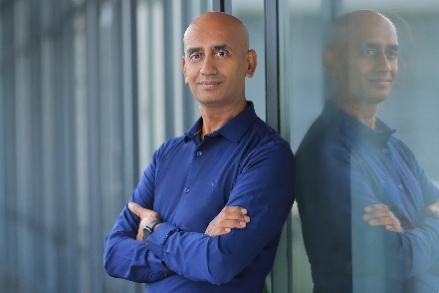
Jagan Rajagopalan [Image source: Elektrobit]
The following is an edited transcript of the conversation.
S&P Global Mobility: As a provider of platform software and AUTOSAR-based solutions, how is Elektrobit evolving its approach to the V-Model to better support reusable, software-defined vehicle architectures?
Jagan Rajagopalan: At Elektrobit, we see the V-Model not as a static process, but as a flexible systems-engineering backbone that must evolve for SDVs. We are shifting the emphasis from project-specific implementations toward architecture‑centric, reusable platform development, particularly in AUTOSAR-based environments. This means stronger separation of concerns, clearer interfaces and continuous traceability from high-level vehicle functions down to software components. The V-Model remains valid, but it is increasingly modular, iterative and software-led, enabling reuse across generations and variants rather than one-off vehicle programs.
Elektrobit is closely involved in both embedded and cloud-based development workflows — how do you see CI/CD practices fitting into safety-critical, ISO 26262-compliant development?
CI/CD is becoming essential even in safety-critical environments, but it must be applied thoughtfully. At Elektrobit, we integrate CI/CD pipelines with safety mechanisms such as requirement traceability, automated testing and qualification-aware tooling. The goal is not continuous deployment of safety software, but continuous integration and continuous verification. When properly governed, CI/CD strengthens ISO 26262 compliance by catching regressions earlier, enforcing process discipline and making safety evidence continuously available rather than a late-stage exercise.
How are simulation and virtualization capabilities being integrated into your development stack, and can they realistically support homologation-level validation?
Simulation and virtualization are now deeply embedded in our development stack — from early architecture exploration to large-scale regression testing. They enable earlier validation of complex system interactions and significantly accelerate development cycles. That said, we see them as complementary to physical testing, not a full replacement today. Simulation can support homologation-level validation in defined scopes, particularly for software-intensive functions, but regulatory frameworks still require a balanced approach combining virtual, hardware-in-the-loop and vehicle-level testing.
As OEMs push for greater control over software stacks, including the OS layer, how is Elektrobit adapting its role within the broader vehicle software ecosystem?
As automotive OEMs take greater ownership of their software stacks, including the OS layer, Elektrobit’s role is evolving from supplier to long-term software partner and enabler. We support OEM-controlled architectures by providing open, standards-based platform software, deep AUTOSAR expertise and development tooling that integrates into their ecosystems. Our focus is on enabling customers to move fast without sacrificing safety, quality or compliance, regardless of how control is distributed across the stack.
Reuse is a core part of Elektrobit’s value proposition — how do you ensure that reused software components remain robust and compliant as hardware platforms and AI-driven features evolve?
Reuse only works if it is systematic and disciplined. At Elektrobit, reused components are treated as products with defined life cycles, not copied artifacts. We maintain compliance through rigorous configuration management, continuous testing across hardware variants and ongoing safety analysis as systems evolve. As AI-driven features and heterogeneous hardware increase complexity, this life cycle-based reuse approach is critical to ensuring robustness without slowing innovation.
From your perspective, how do emerging zonal architectures impact system integration and validation compared to traditional domain-based designs?
Zonal architectures fundamentally change system integration. They reduce wiring complexity and improve scalability, but they shift integration challenges into software, middleware and communication layers. Validation, therefore, becomes more systemic and architecture-driven, with a stronger focus on timing, fault propagation and cross-zone interactions. Compared to domain-based designs, zonal systems demand earlier and more comprehensive integration testing, something that reinforces the importance of virtualization and model-based approaches.
Elektrobit works across multiple toolchains and ecosystems — are you seeing consolidation around a few core platforms, or increasing fragmentation as new AI and simulation tools enter the space?
We see both forces at play. Automotive OEMs are pushing for consolidation around core platforms to control complexity and cost, especially for safety-relevant development. At the same time, AI, data-driven development and advanced simulation are introducing new tools at a rapid pace. Elektrobit’s approach is to remain toolchain-agnostic, enabling integration across ecosystems rather than forcing lock‑in. Interoperability is becoming more important than standardizing on a single tool.
What are the biggest technical or regulatory barriers to wider adoption of simulation-first — or even simulation-only — validation approaches?
The biggest barriers are not technical alone, they are regulatory, methodological and cultural. While simulation fidelity has improved significantly, acceptance by authorities requires transparent models, qualified tools and clear evidence of correlation to real-world behavior. Additionally, organizations must adapt their processes and mindset to trust virtual results. Simulation-first is clearly achievable; simulation-only will require further evolution of standards and regulations.
With OTA updates becoming standard, how does Elektrobit approach continuous validation and life-cycle management beyond initial vehicle release?
With OTA updates, initial vehicle release is no longer the end of validation; it is the beginning of a continuous life cycle. Elektrobit approaches this through continuous validation pipelines, combining regression testing, safety impact analysis and configuration control for each update. The V-Model therefore extends beyond SOP [start of production], ensuring that every software change, whether functional update or security patch, remains compliant, safe and verifiable throughout the vehicle’s life.