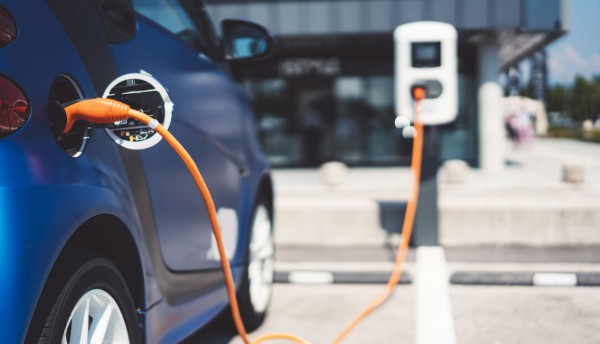
The EU has built approximately 1.1 million public charging points by the end of 2025, representing a fivefold increase from 2020 levels
Europe’s electric vehicle charging infrastructure has expanded at a pace that is now outstripping the growth of the EV fleet itself, highlighting how policymakers and industry stakeholders have adopted a proactive approach to support the region’s electrification ambitions.
A report published by the Brussels-based Transport & Environment (T&E), a nonprofit advocacy group known for its role in exposing the Dieselgate emissions scandal, on July 20, shows that the deployment of EV charging infrastructure across the EU is running well ahead of regulatory requirements, providing an important foundation for the next phase of EV adoption.
The findings shared by T&E in its recent report challenge one of the most persistent consumer concerns surrounding the mass adoption of EVs: concerns about insufficient charging infrastructure, which can create bottlenecks for consumers.
On the contrary, the European market is witnessing the opposite phenomenon, with public EV charging infrastructure being built in anticipation of future demand.
According to T&E, the EU had approximately 1.1 million public charging points by the end of 2025, representing a fivefold increase from 2020 levels. More importantly, the growth in charging capacity has exceeded that of the battery-electric vehicle (BEV) fleet.
Under the Alternative Fuels Infrastructure Regulation (AFIR), all member states are required to provide at least 1.3 kW of public charging capacity for every BEV registered in their national fleets. By March 2026, every EU country except Malta had met this fleet-based requirement, T&E’s analysis pointed out.
When combined at the regional level, EU countries exceeded the AFIR target by an impressive 180%, demonstrating that deployment of EV charging stations is comfortably ahead of EV adoption.
This outcome is largely due to Europe’s regulatory framework. Unlike many other regions that have relied primarily on market forces, the EU has established legally binding infrastructure targets to ensure that charging networks expand in tandem with, or ahead of, EV sales. The AFIR mandates have been successful in creating clear investment signals for charge-point operators (CPOs), utilities, automakers and governments, reducing uncertainty around infrastructure deployment. As a result, the providers of EV charging services have been driving investments ahead of demand for charging stations, the report noted.
Notably, the European Green Deal, stricter vehicle emissions standards, and the region’s long-term goal of phasing out new internal combustion engine (ICE) car sales have encouraged governments and private companies to prepare for a significantly larger EV parc. As a result, infrastructure developers, including utility companies, real estate players and others, recognize that the availability of EV charging infrastructure will be critical if Europe is to meet its climate and transportation objectives, making the deployment of EV chargers a strategic priority rather than a reactive measure.
Progress on this front is particularly evident along the major transport corridors. AFIR requires ultrafast direct current (DC) charging stations of at least 150 kW to be installed every 60 kilometers along the Trans-European Transport Network (TEN-T).
T&E found that by June 2026, 79% of the TEN-T Core network, which includes major national motorways, had already achieved the bloc’s 2025 target. Meanwhile, in Western Europe, compliance exceeded 99%, indicating that long-distance EV travel has become increasingly practical across much of the region.
While Western Europe remains the most mature market, T&E’s findings suggest that Southern, central and Eastern European countries are rapidly catching up. Countries that previously lagged in charging deployment are now recording some of the fastest growth rates in ultra-fast charging infrastructure.
Poland, for example, has increased its TEN-T Core network coverage from just 20% at the end of 2024 to 59% by June 2026. Similar progress is being recorded in Romania and other emerging EV markets. T&E estimates that deploying or upgrading just 70 strategically located charging stations, including 22 in Spain, 11 in Poland and seven in Romania, could increase the EU’s overall compliance with AFIR’s distance-based requirements to more than 90%.
The rapid build-out also reflects growing private-sector investment. Energy companies, CPOs, utilities and fuel retailers are increasingly viewing EV charging as a long-term growth opportunity. Traditional fuel stations across Europe are adding fast-charging facilities, while supermarkets, hotels, shopping centers and commercial property owners are integrating charging services into their offerings. These investments are creating a broader and more diverse charging ecosystem that extends beyond public charging hubs.
Despite the positive momentum, challenges remain. The T&E report noted that charging availability is no longer the primary concern in many markets. Instead, issues such as pricing transparency, interoperability, ease of use and payment convenience are becoming increasingly important.
Looking ahead, the focus is likely to shift toward smart charging, workplace charging and bidirectional charging technologies. Since most EV charging is expected to occur at homes and workplaces, the expansion of private and semipublic charging solutions will complement the growing public network. The EU has already met its 2027 targets for much of the TEN-T Comprehensive network and has made significant progress toward its 2030 goals, underscoring that infrastructure development is increasingly planned for future demand rather than current needs.