



In this exclusive interview, Senoner, who is also on the board of ChargeUP Europe — a lobby body of EV charger suppliers and charge-point operators (CPOs), spoke about a wide range of topics, including Alpitronic’s journey and growth so far, global expansion and plans for India, as well as his perspective on the volatile policy environment. The following are edited excerpts of the conversation.
S&P Global Mobility: Please tell us how Alpitronic was founded. How did your expertise in power electronics help you in designing and developing the range of charging equipment that you have in your portfolio today?
Philipp Senoner: Alpitronic was born in 2009 as an engineering company for power electronic systems. At that time, we mainly developed power electronics for vehicles, including traction inverters for electric cars. We were mainly engaged in the predevelopment stages.
We were trying to develop new technologies, wherein we developed traction inverters, onboard chargers [and] DC/DC converters for fuel-cell vehicles. With that knowledge, we were able somehow be quick in developing chargers for battery-electric vehicles (BEVs).
We established Alpitronic with an aim to develop new technologies, and we are doing that not just with EV chargers but also in the field of semiconductors. We try to integrate latest innovations into our products to deliver efficient systems in the market.
We run a reliability lab for semiconductors. We are going really deep in the value chain wherein semiconductor manufacturing companies such as Infineon, STMicroelectronics [and] Wolfspeed, among others, are testing their equipment with our test systems. We recognize semiconductors as one of the most crucial and lifetime defining subcomponents, and that’s why we are focusing heavily in that area.
In 2016, we decided to develop our own product, which was the EV charger. Later in 2018, we installed our first EV charger. From there, it took us about 2.5 years to get to the first million charging sessions, and now we have record 1-million charging sessions every 4 days.
That’s a lot of data Alpitronic is collecting. How do you use it?
We use this data to support our customers in terms of timely maintenance and repair. We try to understand what is going on in the operations.
Who were you working with when you focused only on power electronics in the predevelopment stages?
We worked with BMW and Mercedes-Benz, but it just in the predevelopment stages. We did not work on products slated for serial production, instead on prototypes with latest technologies. These were R&D projects aimed at pushing the boundaries of technology. These car companies were mainly testing their products as pilots with our newest power electronic components. And then they did their internal development for serial production. So that was one big step.
Then we worked on another project where we had to provide power supplies for airplanes. That was also a solution that we had developed for our customer. It was a painful project because once we had to exchange all the units in the field because we did something wrong. However, we learned a lot from that project, and it helped us a lot to start with the right approach of developing the EV charger.
How would you define the growth that Alpitronic has witnessed over the last few years? Also, what is your perspective on global automakers pivoting to a multifuel pathway?
We recorded a tremendous growth over the last few years. When we started designing and developing our own EV chargers, we were just 21 engineers in office. And now we are almost 1,100 people working together as a team. That said, it was not easy to set up a company and manage such growth in just last 5–6 years with all the processes. We did not know anything about scaling up manufacturing operations, among other areas. So, it was an intensive growth story where we had to put in a lot of hard work.
Coming to your second question on cars with different types of powertrains, in Europe, there is a lot of discussion whether to ban combustion engines by 2035 or not. I think that that's not a healthy discussion for the whole industry, not just for the charging industry, but especially for the vehicle manufacturing industry. I say so because electric cars are getting more affordable with time. We are already seeing medium and high-end electric cars being sold at the same price levels as their combustion engine-powered variants. In Europe, it's still more expensive to buy an electric car, especially a small electric car than a combustion car.
Nevertheless, in my opinion, the number of electric vehicles will rise and eventually more and more BEVs will ply the roads.
I also believe that it's difficult to sustain different types of traction technologies because we are talking about pure diesel, pure gasoline, hybrids, range extenders and BEVs. In my opinion, if you have to sustain in R&D and you want to be on top of the technology of your domain, you have to invest a lot in it without losing focus. The need to develop multiple powertrain systems could cost us our focus, which would be a big issue, in my opinion.
Next is to be competitive and to achieve low cost, one has to scale up. If you have to divide your production into four or five different types of powertrains with different components in it, it's difficult to go to scale. On the contrary, if you compare this approach with [mainland] China, they have achieved a high scale of producing BEVs, all using same components, batteries — they focused on scaling up. I think companies in the US and Europe risk losing ground to the Chinese.
Last year, Alpitronic opened an office in the US. Is it an R&D facility, an assembly plant or a sales office?
It is our US headquarters combining different functions. We have some R&D people there; we also have support, service and sales staff. We are also producing in the US now. So, our US chargers are made in the US with a contract manufacturer.
Please tell us about your global expansion plans. What are your plans for India?
We have opened our office in Riyadh in Saudi recently. From there, we are trying to cover countries in the Middle East. India is a unique market, and we plan to explore it. We are setting up a small team here to explore the market in terms of cost pressures, price, performance requirements and other parameters. We plan to study the market and make our decision on whether we should setup a significant footprint here or not in about 18 months.
We know that India is a very dynamic market and would be a very interesting one in the future. There is a lot of movement towards EVs. Its cheaper to drive an EV in India in comparison to driving a combustion car because the energy cost is quite low. Therefore, we plan to study this place before taking an official call.
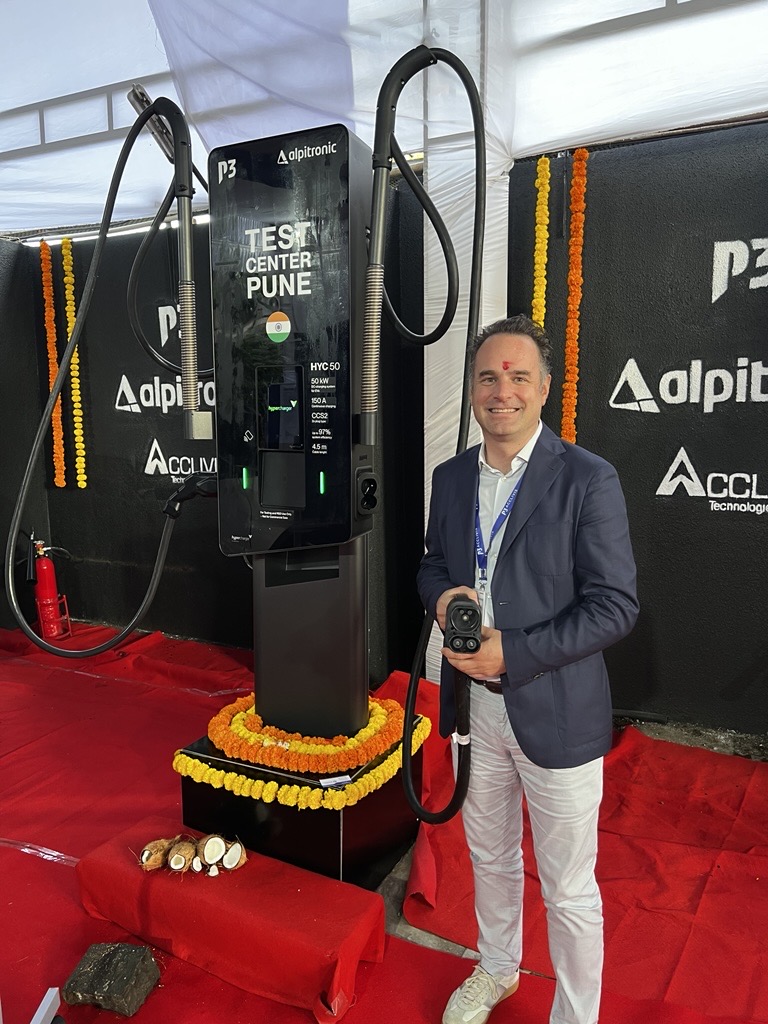
Philipp Senoner, co-founder & CEO, Alpitronic, at his company's first Executive Insight Day, in Pune on October 30. Alpitronic is studying the local market and is engaging with potential customers to conduct interoperability testing over the next few months. Source: S&P Global Mobility
This means Alpitronic is sort of doing a pilot run in India to get a feel of the market. What concerns you more — the cost pressures with which the ecosystem operates here or competition from China-imported charging equipment?
Yes, you can say it’s a pilot run for us here at the moment. India is not an easy market. But if we would be able to compete here in India, we can compete anywhere.
So therefore, this is an important challenge for us. We are not really bothered or afraid of the competition. There could be a possibility that over the course of time we may realize that India is not the right setup for us [at the moment]. But even in that scenario, we would be able to learn so much. We would understand what the OEMs and the charge-point operators (CPOs) think and how do they operate. We will also learn about the compatibility between our EV chargers with the electric cars sold here. I can see a lot of new electric cars on roads here. There are also some Chinese models. So, I believe it’s a very different market. When you’re entering a market, you need to be prepared. That’s what we intend to do.
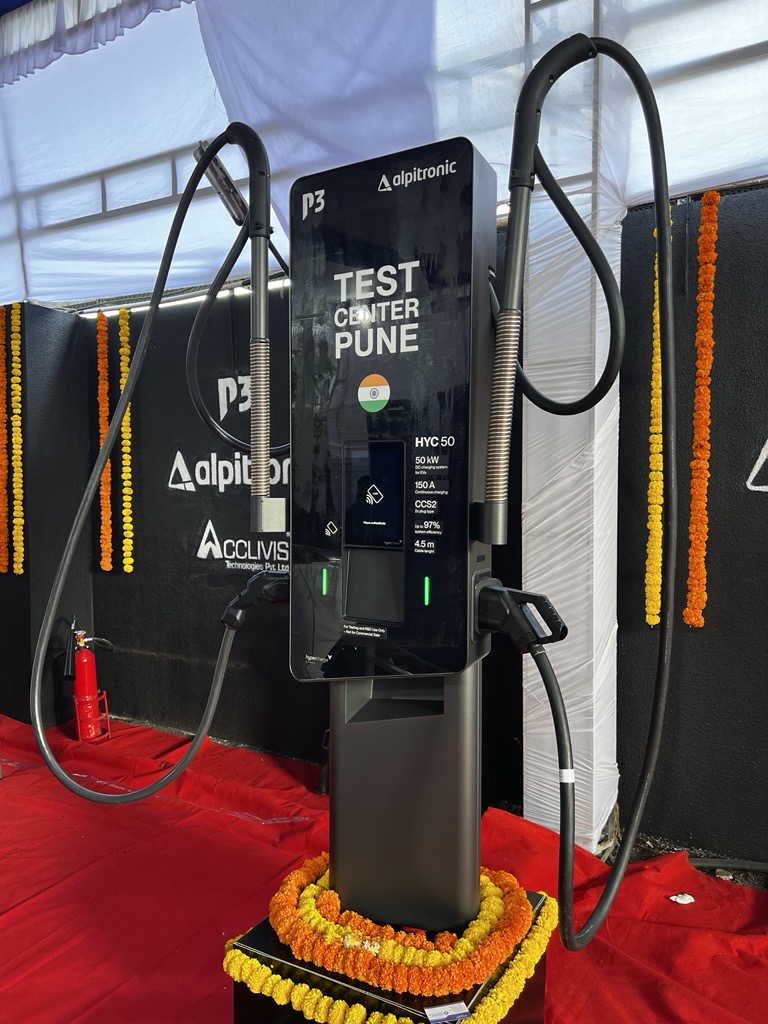
Alpitronic displayed its HYC 50 wall-mountable charger at its Executive Insight Day in Pune on October 30. The HYC 50 can charge 1 BEV at 50kW or 2 BEVs simultaneously at 25kW. Source: S&P Global Mobility.
Will you also study the areas that can help you in trimming down the cost of your EV chargers?
That's a continuous process for us. You can never stop doing that. As new technology becomes mainstream, cost comes down. We have seen this with so many products, for example, cell phones. Initially, they were expensive, and now the cost of cell phones has come down dramatically. However, despite the availability of cheap phones, you also have the premium devices, such as the Apple iPhones. I think with EV chargers, there will be cost pressures in the market and the best ones will be successful. We hope to be part of that.
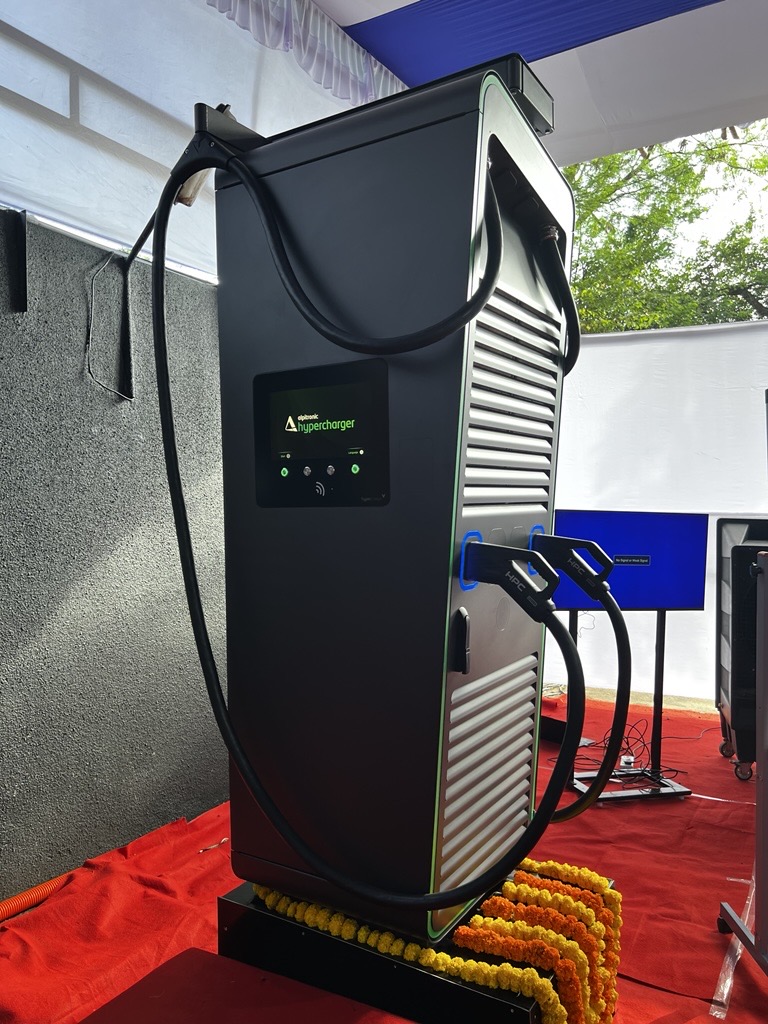
Alpitronic also showcased its high-performance DC charger, the HYC 400, at its Executive Insight Day in Pune on October 30. It can provide 2X200 kW simultaneous charging. Source: S&P Global Mobility.
In the context of the US, you mentioned that Alpitronic has started getting EV chargers made locally. The Trump administration has been imposing a lot of import tariffs, and the policy environment has continued to be volatile over the past few months. How do these factors interrupt the dynamics of an upcoming business such as yours? You would have discussed those tariffs within the leadership team internally.
I would say that the US and Europe are dealing with two different situations. In Europe, BEV uptake is gradually growing, and we are able to see higher adoption every month or quarter. In countries like Norway, Denmark [and] Belgium, among others, the rate of BEV adoption is higher than other countries. However, BEV uptake is continuing to grow.
Meanwhile, the ecosystem in the US is different. Imposition of [new] tariffs is painful for everyone. Unfortunately, we cannot avoid paying tariffs. We are lucky because we have a big part of our supply chain localized in Europe. About 95% of our subcomponents come from local players in Europe.
One part of our strategy is to localize. In the US, we are already able to localize a good portion of our equipment, and we plan to localize more over time. However, for some components, there are parts that you cannot procure in the US locally as they are not produced there. So, for these subcomponents, we have to go to foreign markets. I think tariffs are painful for everyone [in the supply chain] and in the end, it’s the consumer who has to pay more for it.
While you already had a working relationship with leading German automakers on R&D projects focusing on power electronics, which offered a solid upper hand, how are you engaging with OEMs for your range of EV chargers?
I would say that almost every OEM in Europe is using our EV chargers internally. Even in the US, most leading carmakers are using our products too. There, we are working with Ionna, which is a joint venture of eight global car manufacturers. Having them as customers is a great benefit, we are continuously working with them on [improving] interoperability. We are testing systems together and, at Alpitronic, we are getting the feedback for integration. Our technicians and engineers are strongly collaborating.
As you may know, we are also working with Mercedes-Benz to build their EV charging network in the US.
So, we have strong collaborations with every car manufacturer, and it helps us a lot because if you are developing a next-generation EV charger, it has to fit with the capabilities of the vehicle. If the capabilities of the EV charger and the BEV is not going hand-in-hand, the risk is that either the car is demanding more power, and the charger is not made for that, or vice versa, which means that the EV charger is overdesigned and the BEVs are not able to take the power. So, we need to establish this balance, and this is possible only when you are working directly with the carmakers.
We are seeing an increasing trend of migration to 800-V platforms as consumers demand quick charging times. Is this trend picking up in Europe and are Alpitronic chargers designed to charge BEVs built on 800-V architectures?
Yes, our EV chargers are already good-to-go for 800-V BEVs. If you look at our data, you will notice that not many cars are able to take the maximum power that our chargers can supply. However, that’s not a limiting factor as these chargers can still be used [to charge 400-V BEVs].
All our EV chargers, since the beginning in 2018, are actually designed and developed for the 800-V technology. That said, a few of our old chargers were designed for 500-V technology too. The high-voltage capability is one of the key differentiating factors for us. We are always working to develop future-proof technologies, and this is a key focus area.
We are also witnessing early developments on the installation of megawatt-charging stations in Europe. How do you see your products fitting with those kinds of requirements?
We already have a megawatt charger in our portfolio. We plan to begin shipping these to our customers. I think the megawatt charger market will take a while until we have enough electric trucks plying on the roads in Europe. But there will definitely be a market for this category, although not a big marketplace.
There already are a lot of CCS [combined charging systems] chargers deployed to fulfill the charging needs of electric trucks at the moment.
On bidirectional charging technologies, while policymakers are already evaluating the possibilities of mass deployment of bidirectional chargers, how do you see the technology deployment on a large scale? What kind of challenges on the ground do you foresee? Are your chargers designed in a way that they can handle the bidirectional flow of current?
Yes. The power electronics in our chargers are already designed to handle the bidirectional flow of current. However, we are not planning to adopt this technology at the moment as it is still in its early phase. From a hardware perspective, we are already prepared. We need to do a lot of software for this and so on.
On the challenges I see, I would say that you need to provide an ecosystem, which somehow allows you to earn money or receive some other benefit for lending power from your batteries to the grid. That said, I think there is no such ecosystem that exists today.
Meanwhile, at the recently concluded IAA Mobility 2025 in Munich, we have seen that BMW and E.ON are partnering in Germany on this topic. So, let us see how this works out. It's a nice story.
I think if this pilot project works out well, it would be great news for the European power grids because otherwise, grid upgrade would cost a lot of funds. Instead, to handle the additional load, thousands of electric cars can really make the difference by feeding on-demand power to the grid when required. Therefore, consuming cheap energy during the day when solar is providing lots of energy while giving back power during peak demand hours could just work well in establishing grid stability. I am confident that this will come sooner or later.
Are you looking for any capital raise?
No. We are well-funded at the time.
What are your immediate priorities over the next 6 months to a year's time?
Going deeper with more technology development, doing well in the markets we have entered. And having happy customers is our highest priority.


