


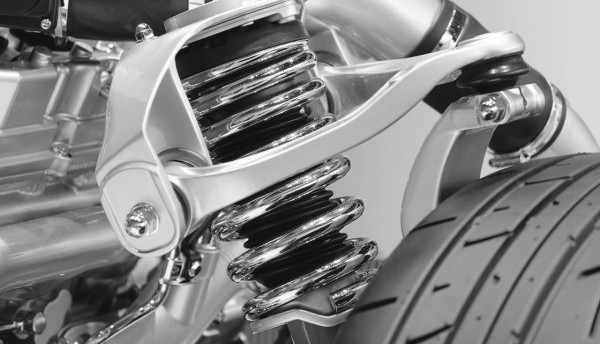
Electric vehicles are significantly heavier than the internal combustion engine (ICE) cars they are replacing, and vehicle mass has climbed by more than 25% over the last decade. Balancing added weight, with rising consumer expectations for ride comfort and refinement, is driving demand for more sophisticated suspension technologies. In China, semi-active suspension is being rolled out at scale, even on midmarket EVs. In Europe, the pressure to hit aggressive price points has largely confined the technology to premium and performance segments. S&P Global Mobility spoke to Philippe Germain, chief engineer at BWI Group, about the implications for European competitiveness.
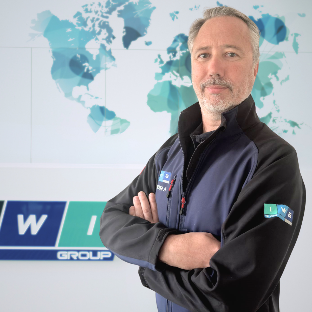
The following is an edited transcript of the conversation.
S&P Global Mobility: The weight of the average passenger car has risen sharply over the last decade. What is driving that, and why should the industry be concerned?
Philippe Germain: The headline figure is that the average passenger car has gained more than 25% in mass over the last ten years, and electrification is by far the biggest factor. It is now common for a midsize EV to weigh more than 2.5 metric tons. From a chassis perspective, that is a very different engineering starting point to the ICE vehicles these platforms are replacing.
The concern is not simply a packaging or range question, although those matter. It is that the physics of the vehicle have fundamentally changed. Heavier cars are harder to control. The inertial forces acting through the chassis are greater, body movements are more pronounced, and the suspension must work harder to deliver a composed ride. At the same time, because electric drivetrains are almost silent, NVH [noise, vibration and harshness] cannot be ignored. The bar for acceptable ride quality has risen just as the underlying engineering challenge has become more difficult.
How well are traditional passive damper systems coping with those demands?
A passive damper has a fixed characteristic. It is a compromise between compliance over broken surfaces and control in cornering or under braking, and that compromise must be set at the point of manufacture. On a 2.5-metric-ton EV with high comfort expectations and near-silent running, the window in which that compromise is acceptable is narrow and getting narrower.
The other issue is development. Achieving an acceptable passive tune for a heavy EV typically requires multiple rounds of physical iteration. That consumes engineering hours, and producing several prototypes eats up the budget.
Semi-active suspension has been available for years. Why is it becoming so much more relevant now?
Semi-active systems continuously adjust damping force in real time, reacting to road inputs, vehicle state and driver demands within milliseconds. That allows you to deliver a soft, compliant ride over poor surfaces and firm, controlled body motion through corners or under heavy braking. It removes the compromise a passive system forces on you. For a heavy EV that has to feel both comfortable and composed, that ability to adapt on the fly is exactly what the physics demand.
The reason it is becoming more relevant now is the combination of the weight problem, rising comfort expectations in an increasingly silent cabin, tighter integration with advanced driver assistance systems (ADAS) and active safety systems, and the broader move toward software-defined vehicles (SDVs). All those trends point in the same direction: toward a chassis subsystem you can control digitally and update in software. The global semi-active market reflects this and is expected to grow from around $5 billion in 2025 to roughly $9 billion by 2033.
Much of that growth is expected in Asia-Pacific, and particularly in China. What are Chinese original equipment manufacturers (OEMs) doing differently?
Chinese manufacturers are deploying semi-active suspension at a scale and a speed that the European industry has not matched. Brands like BYD, NIO, Zeekr and Chery are fitting these systems not just on their flagships but across midrange EVs, where European rivals would default to passive hardware on cost grounds. They have made a strategic decision that ride quality and chassis sophistication are competitive differentiators worth investing in, and they are using the volume of the Chinese EV market to quickly amortize that investment.
There is also a second, less visible effect. Every vehicle they ship with a digitally controlled chassis is future-proofed to a much greater extent than one with a passive system. Not just for consumers, who can expect region-specific over-the-air (OTA) updates, but also for OEMs with infrastructure already being built and developed around digital control. As European OEMs take the leap toward SDV architectures, Chinese OEMs will already be ahead, with an advantage.
Europe's focus has been on bringing affordable EVs to market. Isn't sticking with passive suspension a rational response to that pressure?
On a narrow unit-cost comparison, it looks rational, yes. But it underestimates the hidden development and opportunity costs of staying passive. Yes, a passive damper is cheaper as a piece of hardware, although that comparison ignores the development overhead I mentioned. The iterative prototype builds and extensive track test time adds up. A digitally controlled semi-active system compresses this dramatically. With a digital semi-active platform, a significant portion of the tuning work can be done in software before you hit the track, and in most cases, before the car even exists. Reducing the number of hardware iterations shortens the development cycle, thus getting to market faster.
There are also opportunities that simply do not exist with a passive system. A digital chassis can be retuned for different regional markets without changing hardware, which matters when you are selling the same platform in Germany, Italy, France and the UK. It supports OTA updates, reducing warranty exposure and recall risk. And it unlocks feature content that customers increasingly expect, such as selectable drive modes, adaptive comfort settings and personalization. None of that is visible in a bill-of-materials comparison, but all of it affects the vehicle's lifetime economics and the brand's ability to differentiate.
Next-generation vehicles are moving toward an SDV architecture. What does that mean for chassis systems?
Digitizing the chassis is not just about improving ride and handling. It is a concrete step toward the SDV. Once the suspension is under digital control, it becomes part of the central vehicle architecture. It can talk to ADAS, to the powertrain and to the perception system. We can use forward-looking cameras and radar to read the road surface ahead and prime the dampers before the wheel even reaches the bump. We can optimize suspension behavior during automatic emergency braking to improve stopping distance and control. Those integrations are only possible with a digital chassis.
Chinese OEMs rolling out semi-active suspension at scale are building the foundations of the SDVs of the next decade. European manufacturers that stay with passive hardware in their volume EVs are not just accepting a ride-quality compromise. They are delaying the development of the software and data capabilities that will underpin the next generation of vehicles.
For a European OEM weighing up the investment today, what is the practical argument for adopting semi-active suspension now?
The strongest argument is that the technology is mature and the cost curve has already moved. At BWI Group, we have implemented our semi-active technology, MagneRide, across a wide range of vehicle segments and volumes, and that scale has driven down system cost and improved supply-chain efficiency. European manufacturers do not have to pioneer this. They can adopt a proven, validated solution that has already been stress-tested in arguably the most competitive EV market in the world.
The practical case is therefore quite straightforward. Development timelines are shorter. Regional and over-the-air flexibility is real. The integration with ADAS and safety systems is increasingly important. And the hardware cost gap to passive systems is narrower than most might assume. The longer European OEMs wait, the greater the risk that they will lose ground not just on ride comfort but on the digital architecture that underpins every future vehicle program.
Looking ahead, how essential do you think semi-active suspension will become across the EV market?
I expect it to become standard across the majority of the EV spectrum within this decade. The combination of heavier platforms, higher comfort expectations, tighter ADAS integration and the shift to SDVs all point in the same direction. China has already shown that it is technically feasible and commercially viable at volume, even on vehicles priced well below the European premium segment.
The real question is not whether semi-active suspension becomes essential. I think that outcome is already visible. It is whether Europe adopts it quickly enough to stay competitive in the global EV race, or whether it concedes another piece of the value chain to manufacturers who were willing to invest earlier and at greater scale. From where I sit, the technology, the supply base and the business case are all in place. What is needed now is the decision to act on them.


