


After years of managing a sprawling portfolio that often left investors questioning brand positioning, overlap and capital discipline, Stellantis is attempting a reset. The company is restructuring how it views its stable of iconic marques—splitting them into clearly defined global and regional roles, aligning product pipelines and sales strategies accordingly, and directing investment toward the most scalable and profitable nameplates.
The aim is to eliminate internal competition, reduce duplication in product development and provide long-missing clarity on how each brand contributes to growth and margins. In doing so, Stellantis is effectively trying to cut through its own complexity, laying out a roadmap that prioritizes capital efficiency and sharper execution across brands.
Stellantis has unveiled an expansive €60 billion, five-year strategy aimed at rebooting growth and restoring profitability, laying out a sweeping overhaul of its brands, technology stack, manufacturing footprint and regional operations. The plan, termed by Stellantis as “Fastlane 2030,” was presented at its Investor Day 2026 at its North America headquarters in Auburn Hills, Michigan. The plan finally signals a more disciplined, performance-driven approach after years of uneven execution across its operations.
At the core of the plan is a sharper allocation of capital—concentrating investment where returns are strongest—alongside a renewed emphasis on customer-focused products. The strategy is built around six pillars: tighter brand management, heavy investment in platforms and technology, expanded partnerships, manufacturing optimization, improved execution and greater regional autonomy.
A portfolio under pressure
Stellantis’ 14-brand lineup—long seen as both a strength and a drag—will undergo a significant restructuring in how it is managed and funded. The company is effectively ranking its brands by scale and profitability potential, funneling 70% of planned investments into four global monikers: Jeep, Ram, Peugeot and FIAT, along with its commercial vehicle division, Pro One.
These brands will lead the rollout of new global products and architectures. Meanwhile, regional marques such as Chrysler, Dodge, Citroën, Opel and Alfa Romeo will be expected to leverage shared platforms while sharpening their local identities. Smaller historic brands, DS and Lancia, will be repositioned as niche offerings under the supervision of Citroën and FIAT.
Maserati, the company’s sole luxury brand, is earmarked for expansion with two new E-segment models, though a detailed roadmap will not be disclosed until late 2026.
Across the portfolio, Stellantis plans an aggressive product offensive: more than 60 new launches and 50 upgrades (of existing models) by 2030. Stellantis announced that its planned future model pipeline entails 29 battery-electric vehicles (BEVs), 15 plug-in or range-extended EVs (PHEVs and REEVs), 24 hybrids (HEVs) and 39 internal combustion or mild hybrid models (ICEs and MHEVs) – underscoring a continued multi-energy strategy rather than a full-electric pivot.
€24 billion tech push
Stellantis plans to deploy roughly €24 billion, which will be about 40% of total R&D and capital expenditure, toward platforms, powertrains and technology. Stellantis plans to consolidate production around modular architectures, with half of global volume eventually built on just three platforms, including the newly unveiled STLA One.
The company is also doubling down on flexibility in propulsion systems. By the end of the decade, nearly half of global production will use “multi-regional” powertrains, allowing markets to dictate the pace of electrification.
Technology development will revolve around three proprietary systems—STLA Brain, STLA SmartCockpit and STLA AutoDrive—covering software architecture, in-car experience and autonomous driving respectively. Stellantis disclosed that it plans to target launch of all these technologies in 2027. The carmaker further shared that 35% of its annual global volumes are expected to adopt at least one of these technologies by 2030 and over 70% by 2035.
Artificial intelligence is expected to play a central role, with Stellantis already deploying over 120 AI-driven applications internally.
Partnerships as leverage
Unlike past strategies that relied heavily on in-house development, Stellantis’ ambitious ‘Fastlane 2030’ strategy leans on partnerships to extend reach while reducing costs.
The company is expanding ties with [mainland] China-based Leapmotor, including joint purchasing and shared production capacity in Spain. It is also deepening cooperation with Dongfeng, with an aim of reviving its Chinese joint venture to build Peugeot and Jeep models, while planning a new European JV focused on engineering and distribution.
Stellantis also announced that it is exploring new collaborations with India’s Tata Motors with an aim of boosting competitiveness in emerging markets. Separately, it is also exploring a potential tie-up with Tata Motors subsidiary Jaguar Land Rover (JLR) to jointly focus on sharing product and technology development for the US market.
On the technology front, Stellantis is working with a broad coalition of partners—including Qualcomm, NVIDIA, Wayve, Uber, Mistral AI, CATL and Applied Intuition—reflecting the increasing complexity and cost of software-defined vehicles (SDVs).
Manufacturing reset
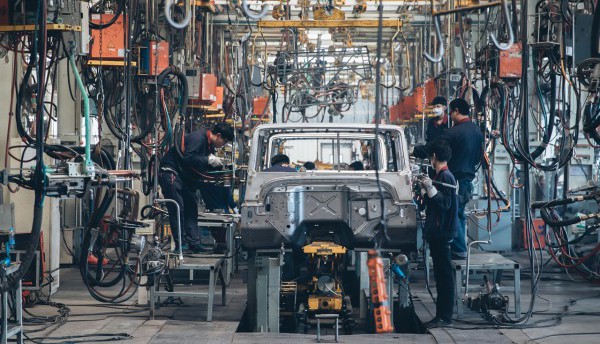
Stellantis’ pivot will also bring significant changes to its existing manufacturing base, especially in Europe, where capacity will be cut by more than 800,000 units through plant repurposing and partnerships. Facilities in Poissy, Madrid, Zaragoza and Rennes will play a role in this restructuring.
Capacity utilization, a persistent weakness, is targeted to rise from current 60% to 80% in Europe by 2030. A similar 80% utilization rate is being targeted in the United States as well, while plants in the Middle East and Africa are projected to reach full capacity through localized production.
The company says job preservation remains a goal, though the scale of restructuring suggests a delicate balance between efficiency and employment.
Faster, leaner execution
A key admission embedded in the plan is that Stellantis has been too slow and inconsistent in execution. The company now aims to cut vehicle development cycles nearly in half—from as long as 40 months today to just 24 months.
It is also targeting top-quartile quality performance globally and pushing cost reductions through a multi-year Value Creation Program (VCP) expected to deliver €6 billion in annual savings by 2028.
Regional autonomy, uneven ambitions
Perhaps the most notable shift by the carmaker is its organizational approach. Decision-making is being pushed down to regional teams, reflecting the reality that market conditions vary widely. The targets are based on local market conditions and consumer preferences:
a) North America: The carmaker is targeting 25% revenue growth, with margins of 8–10%. This will be supported by 11 all-new models, including seven new models under the $40,000 price range and two models under the $30,000 price point. Stellantis announced that the North America region will receive 60% of the remaining €36 billion on developing brands and products based on the region’s market opportunities and profitable growth potential.
b) Enlarged Europe: Stellantis plans to target 15% revenue growth but slimmer margins of 3%-5%, with a focus on affordable electric city cars and cost discipline. The product strategy for Europe includes expanding coverage with C-segment models as well as introduction of an E-car, which would be new affordable, city-friendly, electric car. Latter is planned for production at the carmaker’s Pomigliano d’Arco plant in Italy.
c) South America: Stellantis aims for a 10% revenue growth and a strong margin of 8% to 10%, further building on its leadership in Brazil and Argentina. The company plans to roll out new pickup trucks to boost its margins in this region.
d) Middle East & Africa: The company shared a target of 40% revenue growth and margins of up to 12%, driven by localization and imports, mainly from its Asian footprints.
e) Asia Pacific: The carmaker did not share any roadmap for revenue growth but disclosed that it aims at securing modest margins of 4%–6% by mainly leveraging its strategic partnerships to enable asset-light growth.
High stakes, familiar risks
All in all, Stellantis’ Fastlane 2030 strategy aims to recalibrate global operations by betting on disciplined capital allocation and partnerships can offset the rising costs of electrification and software development. At the same time, the company is making difficult choices that entail prioritizing some brands over others, shrinking capacity in Europe and leaning heavily on external collaborators.
At the macro level, Stellantis’ revised approach reflects the broader pressures that the global legacy automakers face today – a fragmented transition to electrification, rising protectionism and intensifying competition across global markets.


