Automotive News and Insights

Automotive News and Insights

Stay ahead of the curve with AutoTechInsight's daily automotive news and insights, offering a fresh and succinct yet insightful perspective on the latest trends and developments as they emerge in the automotive industry. Our dedicated Automotive Supply Chain and Technology team tirelessly sources and aggregates the most relevant news on technology, supply chain, and OEM strategy. But that's not all - we go the extra mile to analyze their significance and contextualize them with the help of our original research and forecasts.

News in AutoTechInsight is thoughtfully categorized across our unique Vehicle Domains, making it easier for you to access the information that matters most to you. Our articles are also extensively tagged against multiple criteria, enabling seamless filtering to suit your preferences. With a customizable feed tracker, a powerful search engine, and the convenience of in-built RSS feed creation capability, you can effortlessly consume the wealth of analysis and stay informed like never before.

Join the community of industry leaders relying on AutoTechInsight's daily automotive news and insights to make data-driven decisions and uncover new opportunities in the dynamic automotive landscape. Embrace a new era of automotive intelligence today!

Start your AutoTechInsight journey by staying informed and ahead in the fast-paced world of automotive technology with BriefCASE, our weekly newsletter. Packed with the latest free-to-view news, insights, trends, and developments from the automotive industry, this newsletter is your gateway to cutting-edge information.

Subscribe to BriefCASE

Main content includes:

  • Up to 30 news articles per day
  • 4+ insight articles per month (our premium analysis)
  • Full suite of Car Cutaways
  • Complimentary access to 12 AutoTechInsight webinars per year
  • AutoTechInsight BriefCASE

Latest assets for Automotive News and Insights

NXP collaborates with Quanta on deterministic zonal networking for software-defined vehicles
NXP Semiconductors is collaborating with Quanta to enable a deterministic zonal networking solution for next-generation vehicle architectures as the automotive industry transitions to software-defined vehicle (SDV) architectures. The solution is based on NXP's S32 automotive processing platform and the TrustMotion MotionWise middleware to provide predictable, real-time communication across zonal vehicle networks. The solution is built on NXP S32-based zonal controllers and targets a major ori...
VW-backed Gotion launches Gnascent sodium-ion battery
Gotion High-Tech, a leading Chinese battery maker backed by VW, officially launched its dedicated sodium-ion battery brand Gnascent at its 15th Global Technology Conference, where it introduced three specialized versions of the battery. Gotion said that it has already established gigawatt-hour (GWh) scale production lines for these products in Tangshan and Hefei in mainland China. The Gnascent lineup includes a high-energy version with an energy density of 261 Wh/kg, which represents a 60%...
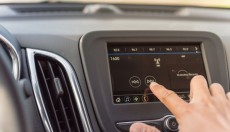
Hyundai debuts AI infotainment system on new Grandeur sedan
Hyundai Motor has launched the facelifted Grandeur sedan in South Korea, describing it as a blend of the vehicle's long-standing luxury heritage with cutting-edge software-defined vehicle (SDV) technologies. Grandeur is Hyundai Motor's most iconic flagship sedan, and since its debut in July 1986, the model has remained at the forefront of South Korea's premium sedan market for nearly four decades. The new Grandeur is powered by Hyundai Motor's latest AI infotainment system and a next-generati...
Auto China 2026: Pateo and NVIDIA collaborate to debut software-hardware integrated AI box solution
Pateo announced at the 2026 Auto China event in Shanghai that it has reached a series of deep collaborations with NVIDIA and a leading new-energy vehicle (NEV) original equipment manufacturer. The company said it is accelerating the transition of on-vehicle large models from technical verification to large-scale mass production and has achieved substantial progress in implementing in-vehicle AI large models and in applying advanced computing platforms. As automotive intelligence ent...
Stanley Electric’s FY 2025/26 net sales marginally up to $3.24 billion
Japanese supplier Stanley Electric reported a 1.7% year-over-year increase in net sales to ¥518.4 billion (nearly $3.24 billion) in the fiscal year ended March 31, 2026. Despite a marginal improvement in net sales, the company recorded a 12.9% year-over-year decline in operating profit to ¥42.6 billion, resulting in an operating margin of 8.2% compared to 9.6% in the previous financial year. Stanley Electric reported net income of ¥32.8 billion, up 2.4% from ¥32 billion in fiscal year 2024/2...
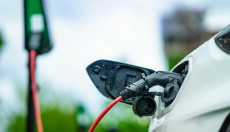
BMW rolls out preferred pricing at Ionna Charging Network across the US
BMW of North America has launched a preferred pricing program at Ionna charging locations across the US. The move is aimed at further enhancing the public charging experience for BMW and MINI electric vehicle drivers. Beginning immediately, BMW and MINI drivers who initiate charging with Plug & Charge or the My BMW App will receive 20% off charging sessions through Sept. 30. The offering is fully integrated within the vehicle's digital ecosystem and is automatically applied without the ne...
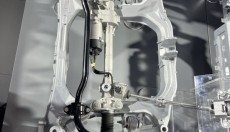
China Automotive Systems starts supplying electric power steering systems to European division of a global automaker
China Automotive Systems Inc. (CAAS) announced that it has started supplying electric power steering (EPS) for a global automaker's European division. The automaker, whose identity has not been disclosed, will use EPS from the mainland Chinese supplier in its two new vehicle models in Europe, with more vehicle projects planned to follow. The annual supply volume is expected to reach approximately 300,000 units. Over the past two years, from project initiation to volume shipment, the CAAS team...
Thyssenkrupp plans to streamline manufacturing operations in US, close Terre Haute plant by March 2027
Thyssenkrupp Presta North America, part of the thyssenkrupp Automotive Technology segment, plans to close its production site in Terre Haute, Indiana, US, by March 31, 2027. As part of this planned closure, the affected US production activities in the chassis business are expected to be reorganized with a focus on the Hamilton facility in Ohio, US. This planned measure is part of the Automotive Technology segment's ongoing transformation and is intended to make its North American business mor...
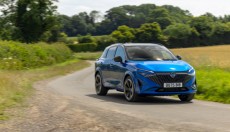
Interior Insight: Nissan Qashqai
The family car was once a blunt instrument. It needed to seat five, swallow a pram and survive supermarket car parks. Style was optional; charm was rare. Yet over the past decade, the family crossover has become the automotive industry’s central product: a machine expected not merely to transport but also to reassure, entertain and flatter. Few vehicles in Europe embody that evolution more fully than the Nissan Qashqai, whose latest interior reflects a broader transformation in automotive desi...
The V-Model, recompiled: Q&A with MAHLE Powertrain
For decades, the automotive industry has relied on the V-model as its preferred blueprint for engineering discipline. Conceived in an era when vehicle systems were largely mechanical and development cycles stretched comfortably over several years, the model offered manufacturers a reassuringly linear logic: requirements flowed downward through design and implementation before climbing back upward through validation and verification. Each stage mirrored another, and every requirement could, in pr...
The V-Model, recompiled: Q&A with Elektrobit
For decades, the automotive industry has relied on the reassuring geometry of the V-Model. Conceived for an era when vehicles were defined chiefly by mechanical engineering, the framework brought order to complexity: requirements cascading down one side of the “V”, implementation at the base and validation climbing methodically back upward. In an industry where failure can trigger recalls, regulatory scrutiny or safety crises, such discipline became indispensable. Yet, the rise of the sof...
The V-Model, recompiled: Q&A with Aptiv
In automotive development, the V-Model has long served as the backbone of the engineering discipline, mapping requirements to verification in a mirrored structure that ensures traceability from concept to production. For decades, it provided the industry with a predictable rhythm: define, design, implement, test — then validate back up the chain. But the model was born in an era of hardware-dominated vehicles, when software changes were infrequent and tightly controlled. Each electronic con...
Interior Insight: Nissan Qashqai
The family car was once a blunt instrument. It needed to seat five, swallow a pram and survive supermarket car parks. Style was optional; charm was rare. Yet over the past decade, the family crossover has become the automotive industry’s central product: a machine expected not merely to transport but also to reassure, entertain and flatter. Few vehicles in Europe embody that evolution more fully than the Nissan Qashqai, whose latest interior reflects a broader transformation in automotive desi...
Super Tech Day 2026: A deep dive into CATL’s multi-chemistry paradigm shift
At CATL 2026 Super Technology Day on April 21 in Beijing, the world’s largest battery manufacturer signaled a profound strategic shift, moving away from the pursuit of innovating an exceptionally capable battery material toward a sophisticated multi-chemistry synchronization strategy. This pivot acknowledges that as the world transitions to renewable energy, the complexity of diverse applications — ranging from mass-market commuting to heavy-duty off-roading and aviation — cannot be met by...
The V-Model, recompiled: Q&A with MAHLE Powertrain
For decades, the automotive industry has relied on the V-model as its preferred blueprint for engineering discipline. Conceived in an era when vehicle systems were largely mechanical and development cycles stretched comfortably over several years, the model offered manufacturers a reassuringly linear logic: requirements flowed downward through design and implementation before climbing back upward through validation and verification. Each stage mirrored another, and every requirement could, in pr...
The V-Model, recompiled: Q&A with Elektrobit
For decades, the automotive industry has relied on the reassuring geometry of the V-Model. Conceived for an era when vehicles were defined chiefly by mechanical engineering, the framework brought order to complexity: requirements cascading down one side of the “V”, implementation at the base and validation climbing methodically back upward. In an industry where failure can trigger recalls, regulatory scrutiny or safety crises, such discipline became indispensable. Yet, the rise of the sof...

Click here to view more Automotive News and Insights assets...

preload preload preload preload preload preload